
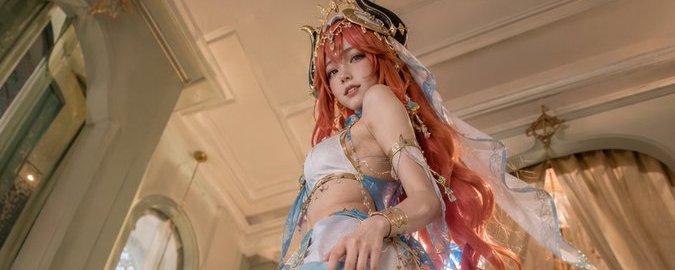
H3|四人《扫腿舞》连续编舞 + 跺脚转场

视频图片来源 ai图片大神 @xiaqingfeng666 For the target video, four separate reference images are provided:
- <Picture 1> = Performer 1
- <Picture 2> = Performer 2
- <Picture 3> = Performer 3
- <Picture 4> = Performer 4
Each picture is an independent visual reference for its corresponding performer and dance section.
Do NOT combine the four performers into one scene.
Do NOT merge the four images.
Do NOT copy the performer from one reference image into another section.
Each performer appears only during their own designated section.
The four sections form one continuous short-form dance performance inspired by the recognizable viral Chinese “扫腿舞” choreography style.
The choreography should follow the actual movement logic of the dance:
rhythmic weight shifting + alternating footwork + floor-brushing/sweeping leg movements + side steps + knee bends + hip/torso rhythm + arm coordination + sharp beat accents.
The sweeping leg movement is a signature component of the dance, NOT the only movement.
The choreography must contain multiple connected dance phrases.
Never loop one movement repeatedly.
GLOBAL VISUAL REFERENCE RULE
Each reference image is the strict visual anchor for its own section.
For each section:
Preserve the exact character identity, hairstyle, facial features, body proportions, clothing, costume colors, footwear, accessories, environment, camera perspective, lighting direction, color palette, and overall visual style from the corresponding reference image.
Do not redesign the character.
Do not change the costume.
Do not change the shoes.
Do not change the leg proportions.
Do not invent new accessories.
Do not replace the environment unnecessarily.
Because all four reference images are low-angle leg-focused shots, preserve the low-angle perspective and leg-focused cinematic composition.
Maintain realistic human anatomy and physically accurate movement.
OVERALL DANCE LANGUAGE
The four performers are performing different choreographic variations of the SAME “扫腿舞” vocabulary.
They should feel like four different sections of one professionally choreographed viral dance.
They must NOT perform four completely unrelated dances.
The movement vocabulary should remain consistent:
- alternating weight shifts
- side-to-side footwork
- heel and toe accents
- small traveling steps
- knee bends
- hip rhythm
- torso rhythm
- coordinated arm movement when visible
- floor-brushing leg sweeps
- directional changes
- quick pivots
- sharp musical stops
- strong stomp accents
The four performers must have different combinations and different movement emphasis.
No identical choreography repeated four times.
MUSIC
Use a fast modern dance track inspired by the rhythm and performance structure associated with the viral “扫腿舞” / “30 Sexy” dance trend.
Strong electronic percussion.
Deep bass.
Sharp kick drums.
Clear 8-beat rhythmic structure.
The choreography is tightly synchronized to the beat.
Every important foot contact must have a clear rhythmic relationship with the music.
The stomp at the end of every section is a major musical accent.
The stomp simultaneously acts as the visual transition point.
SECTION 1 — PICTURE 1
00:00–00:03.5
Use <Picture 1> as the exclusive visual reference for Performer 1.
Begin from the exact visual composition of <Picture 1>.
The camera is already positioned in the low-angle leg-focused perspective of the reference.
First 8-beat phrase
Start with a subtle rhythmic groove:
weight shift → small side step → knee bend → recover → opposite side step → heel accent.
Do not immediately perform a large sweep.
Build the rhythm first.
The performer then transitions into:
right step → left foot brushes across the floor → recover → weight shift → right foot sweeps outward → recover.
The sweep should be rhythmic and controlled, resembling the recognizable “扫腿舞” footwork.
It should NOT look like a martial-arts kick.
Second phrase
Immediately continue:
small side step → heel tap → torso rhythm → opposite step → knee bend → quick weight transfer → short floor sweep.
The choreography continues without stopping.
Final accent
On the final strong beat:
quick weight transfer → right foot lifts → powerful controlled stomp.
The stomp is sharp and clearly audible.
The foot impacts the floor exactly on the musical beat.
At the instant of impact:
- camera quickly tracks downward toward the foot
- strong but realistic motion blur
- brief floor reflection flare
- sharp bass impact
- visual vibration from the foot impact
The stomp becomes the transition trigger.
TRANSITION 1 — PICTURE 1 → PICTURE 2
Do NOT use a simple static cut.
The stomp creates a motion-driven match cut.
At the exact moment the foot hits the floor:
the camera rapidly follows the downward movement of the foot.
The floor and foot briefly fill the frame.
Use the impact motion blur as a natural visual mask.
The next frame reveals <Picture 2>.
The second performer appears with their foot already completing a matching landing movement.
The transition should feel like:
Performer 1 stomps → impact → camera follows foot → motion blur → Performer 2 lands into the next beat.
The musical beat remains continuous.
SECTION 2 — PICTURE 2
00:03.5–00:07
Use <Picture 2> as the exclusive visual reference for Performer 2.
The second performer begins immediately from the landing beat created by the previous stomp.
This choreography is deliberately different from Section 1.
First phrase
Start with faster alternating footwork:
left step → right toe tap → left weight shift → right foot brushes outward → recover → left step.
Keep the movements compact and fast.
Then:
cross step → uncross → heel accent → torso rotation → side step.
The movement should have more rapid weight transfer than Section 1.
Second phrase
Introduce alternating leg movement:
right sweep → recover → left sweep → recover → quick side step → knee bend → pivot.
The two sweeps are part of a larger phrase.
Do not loop them.
Immediately transition into a new foot pattern.
Direction change
Perform:
step → diagonal step → pivot → opposite direction → quick heel tap → recover.
The camera performs a subtle lateral tracking movement following the directional change.
Final stomp
On the final musical accent:
rapid step → weight transfer → left foot rises → strong stomp.
The stomp lands exactly on the beat.
Camera rapidly swings laterally toward the stomping foot.
The foot and floor briefly dominate the frame.
TRANSITION 2 — PICTURE 2 → PICTURE 3
Use a horizontal whip transition combined with the stomp.
At the exact moment of the stomp:
the camera rapidly moves sideways in the same direction as the performer's final motion.
The cathedral/environment or background becomes a brief natural motion-blurred streak.
The motion blur transitions directly into <Picture 3>.
Picture 3 begins with the third performer already in motion.
No frozen frame.
No obvious digital wipe.
No random scene change.
The transition should look like one continuous dance-performance camera movement.
SECTION 3 — PICTURE 3
00:07–00:11
Use <Picture 3> as the exclusive visual reference for Performer 3.
This is the low-center-of-gravity climax section.
The choreography should be visually stronger than Sections 1 and 2.
Opening
Begin with:
step → controlled knee bend → lower center of gravity → side weight shift → torso rhythm.
The performer moves lower toward the floor.
Main sweep phrase
Perform:
weight transfer → large low sweeping leg movement → recover → opposite step → short reverse sweep → pivot.
The first sweep is large.
The reverse sweep is shorter and faster.
Do not repeat the same sweep continuously.
Immediately transition into:
knee lift → step down → torso twist → side step → quick heel accent.
Climax phrase
The rhythm accelerates.
Perform:
two rapid steps → low sweep → recover → pivot → diagonal step → sharp stop.
The camera subtly pushes in while maintaining the low-angle perspective.
The sweeping leg should pass dynamically across the foreground.
Use realistic motion blur only during the fastest portion.
Final stomp
The performer rises slightly from the low stance.
Then:
step → weight transfer → powerful final stomp.
The stomp is the strongest impact of the first three sections.
The foot hits the floor exactly with the musical bass impact.
The camera rapidly pushes toward the foot.
TRANSITION 3 — PICTURE 3 → PICTURE 4
Use a stomp-driven push-in transition.
At the moment of impact:
camera rapidly pushes toward the floor.
The stomping foot fills the foreground.
The reflective floor creates a brief bright motion streak.
The image becomes temporarily dominated by motion blur.
Then the camera rapidly pulls through the motion blur and reveals <Picture 4>.
The fourth performer begins already moving on the same musical beat.
The transition must feel like:
stomp → camera push → impact blur → reveal → continuation of choreography.
No static cut.
SECTION 4 — PICTURE 4
00:11–00:15
Use <Picture 4> as the exclusive visual reference for Performer 4.
This is the final high-energy climax and ending section.
Opening
Immediately begin with:
rapid left-right steps → toe accent → knee bend → opposite step → torso rhythm.
The rhythm is faster than the previous sections.
Main combination
Perform a continuously evolving sequence:
right sweep → recover → cross step → left sweep → recover → pivot → side step → knee lift → sharp landing.
Do not repeat this exact sequence.
Immediately continue into:
two quick steps → weight shift → short sweep → torso accent → direction change.
Final major sweep
The music reaches its strongest climax.
Perform the largest and fastest sweep of the entire four-section routine.
Sequence:
rapid preparation steps → deep weight transfer → large sweeping leg movement → immediate recovery → pivot → short opposite sweep → upright recovery.
The final sweep should be a visual climax, but it must remain physically realistic.
No impossible leg extension.
No distorted anatomy.
Final stomp
Immediately after recovering:
one quick step → powerful final stomp.
The final stomp lands exactly on the final musical impact.
FINAL CAMERA OUT
Unlike the previous transitions, the final stomp does NOT transition to another character.
Instead:
At the final stomp, the camera reacts to the impact with a very short downward movement.
Then immediately performs a controlled Pull Out.
The camera moves from the low-angle leg-focused composition toward a wider cinematic composition.
Reveal more of the surrounding environment.
The performer remains the visual center.
Hold the final pose for approximately 0.5 seconds.
The final frame should feel like the ending of a professional short dance performance.
CAMERA DESIGN
The camera must support the dance rather than overpower it.
Overall camera language:
low-angle cinematic dance cinematography.
Picture 1
Low-angle tracking + subtle push-in.
Picture 2
Lateral tracking + short whip movement during transition.
Picture 3
Low-angle push-in + subtle arc during the large sweep.
Picture 4
Dynamic tracking + final push-in + controlled pull-out.
Camera movement must react to the dancers' footwork.
Do not perform continuous large orbital movement.
Do not use excessive camera shake.
Do not use extreme fisheye distortion.
Do not constantly zoom.
Keep the dancer and leg movement readable.
MOTION REALISM
All movements must obey realistic human biomechanics.
Correct center of gravity.
Correct supporting leg.
Natural knee bending.
Natural ankle movement.
Correct foot-ground contact.
Realistic acceleration and deceleration.
Realistic cloth physics.
Natural hair movement.
Natural body momentum.
Subtle motion blur during fast sweeps.
No floating feet.
No foot sliding.
No duplicated limbs.
No extra limbs.
No broken joints.
No impossible body deformation.
No character identity drift.
No costume transformation.
STRICT ANTI-LOOP REQUIREMENT
This is an important requirement.
Do NOT generate a looping dance animation.
The four sections must be visibly different.
Do NOT repeat:
- the same sweep
- the same footwork
- the same kick
- the same body movement
- the same camera movement
- the same pose
- the same left-right animation cycle
Each section must introduce new choreography.
The complete progression must feel like:
Section 1: establish rhythm
↓
Section 2: increase footwork complexity
↓
Section 3: lower center of gravity and build climax
↓
Section 4: fastest final combination
↓
Final stomp + pull out
The viewer should perceive one continuous choreographed performance divided into four distinct performers.
VISUAL QUALITY
High-end live-action cinematic fantasy photography.
Ultra-realistic skin.
Natural skin pores and fine texture.
Individual hair strands.
Realistic costume materials.
Physically based rendering.
HDR.
8K detail.
Subtle cinematic film grain.
Realistic reflections.
Realistic volumetric lighting.
Maintain the exact lighting character of each corresponding reference image.
Do not introduce a completely new lighting setup.
Do not change the visual identity of the reference.
SOUND DESIGN
Deep rhythmic dance music.
Strong electronic kick.
Clear bass impact.
Subtle cathedral/environmental ambience if present in the reference.
Every foot landing produces a realistic physical impact sound.
Sweeping foot movements produce subtle contact sounds with the floor.
The three transition stomps are especially strong:
STOMP → musical impact → camera transition.
The fourth stomp is the final musical climax.
No dialogue.
No crowd noise.
No random sound effects.
ABSOLUTE PRIORITIES
- Each Picture controls its own performer and visual identity.
- Four performers must NOT be merged into one scene.
- The choreography must follow recognizable “扫腿舞” movement logic.
- Sweeping is only one component of the choreography.
- Each performer must have a different choreography variation.
- The choreography must continuously evolve rather than loop.
- Every section ends with a strong synchronized stomp.
- Each stomp triggers a different cinematic transition.
- All movements must remain physically realistic.
- Preserve the exact visual characteristics of each input image.
The final result should feel like a professional four-part viral “扫腿舞” music video, with four different performers, four distinct choreography variations, continuous beat synchronization, dynamic low-angle leg-focused cinematography, and stomp-driven transitions connecting each performer.